Spradling — Material processing pathways

Marine vinyl is cut, joined, and cleaned under different constraints than a garment cloth. Name the step before you name a performance target.

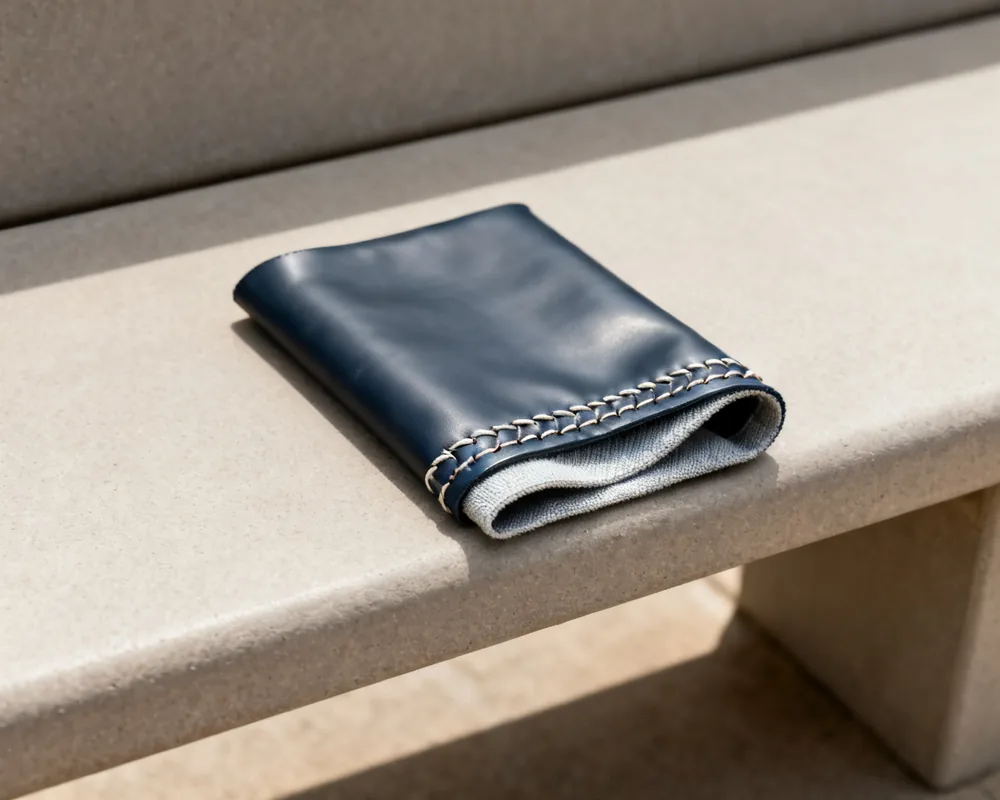
unbranded marine vinyl pieces laid out for pattern cutting

Material processing pathways

Cutting

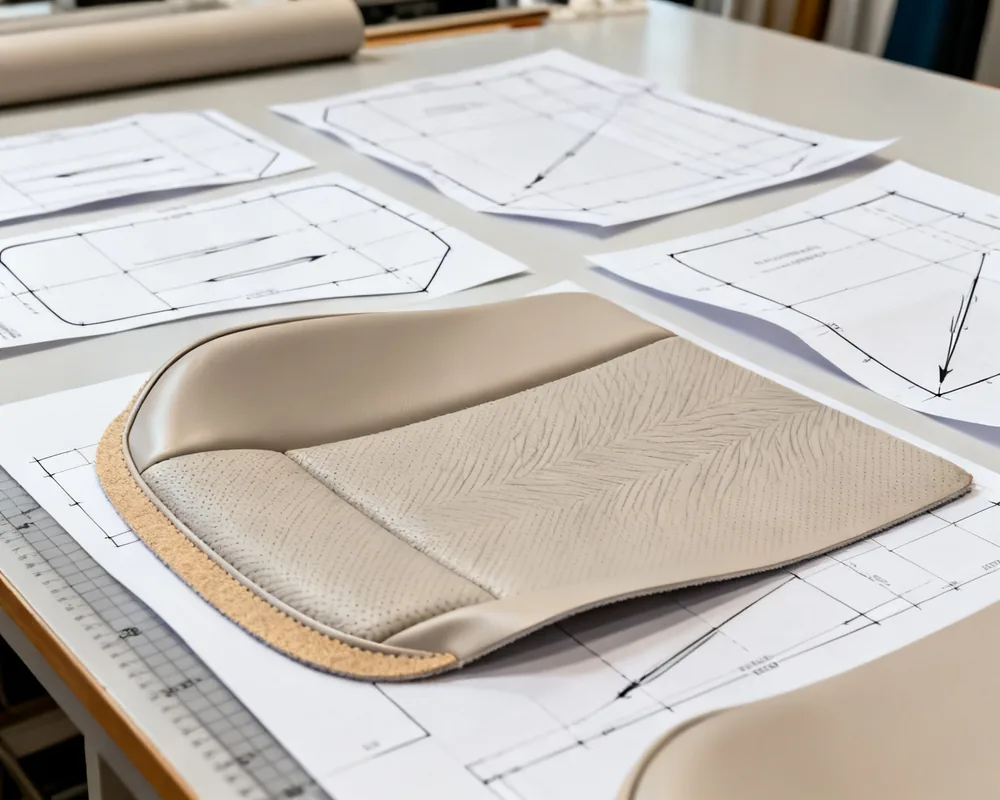
Cushion patterns for helm seats and bolsters waste less material when the cuttable width is known before the marker is drawn. Ask whether the quoted width includes the unusable edge, and whether the vinyl is supplied as a roll, a cut length, or another format. Grain direction matters on a marine surface because a directional texture can read as a different color once it is turned on a curved seat. Mark the face and the backing on the sample so the cutting note matches the side that will be seen.

Mass can affect how a stack of plies behaves under a knife, but a GSM target is still a buyer field until a method and specimen are attached. Do not copy a width from an Allegro or Marlin search phrase into the marker. Confirm it against the material that will actually be cut.

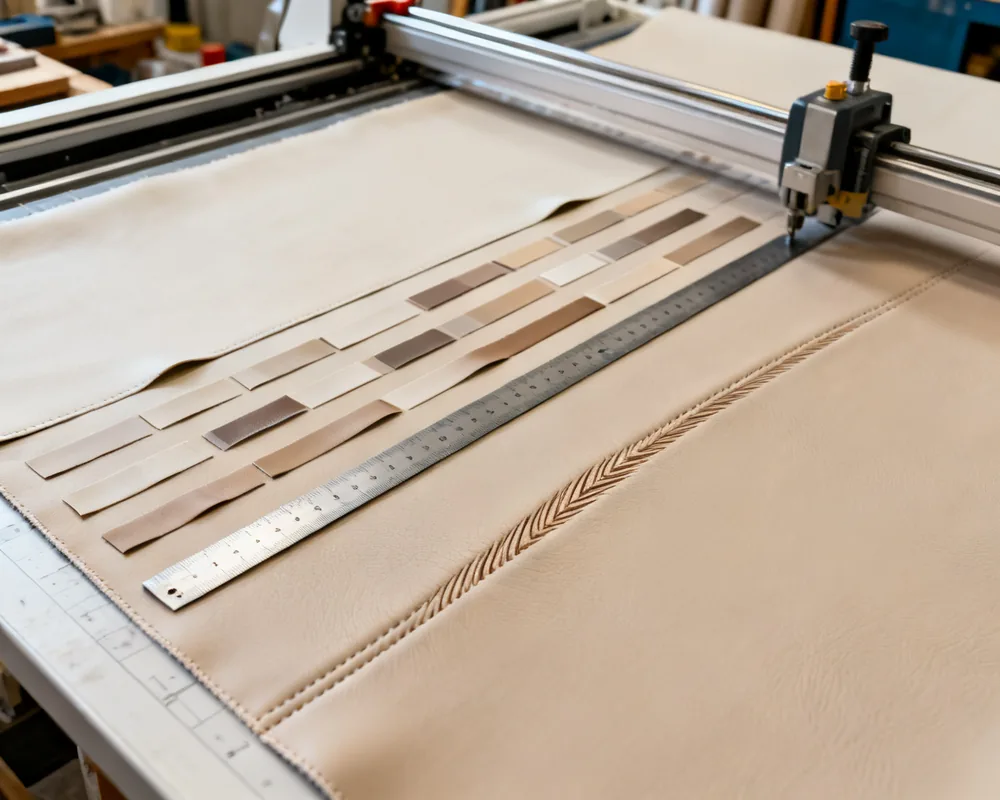
vinyl cutting layout with sample strips and grain direction

Joining

Seams on a marine cushion may be sewn, bonded, or both. The brief should say which interface is real for the chosen vinyl. A backing cloth can take a stitch differently from a compact coated face, and an adhesive trial is only relevant when bonding is part of the build. Record the thread, needle, or adhesive as a process note, not as a property of every Spradling-named surface.

Edge behaviour shows up at corners and zippers. If the development question is seam slippage, tear at a stitch line, or adhesive wet-out, write the acceptance criteria before the trial. A pass on one seam construction does not travel to a welded join. Keep the specimen condition, including any grain-side coating, next to the result so a later lot can be compared with the same setup.

unbranded sewn vinyl seam sample for marine cushion construction

Care

Exterior cushions, spray-exposed cockpits, and interior cabin seating do not share one cleaning story. Describe the cleaner, the rinse, and how often the surface is wiped before anyone treats a care sentence as universal. Color change, plasticizer migration, and grain wear are separate observations. A light-exposure method and a wet-abrasion method should stay in different rows.

If the buyer is comparing Apex marine upholstery vinyl with Aries or Diamante, the care note should follow each specimen. Gloss level changes how a cleaner mark is seen. Ask for the material-specific finish record rather than assuming every collection has the same topcoat. Nothing on this page states that a surface is permanently waterproof or flame resistant. Those claims need a named method, a specimen, and a scope that matches the cushion in use.

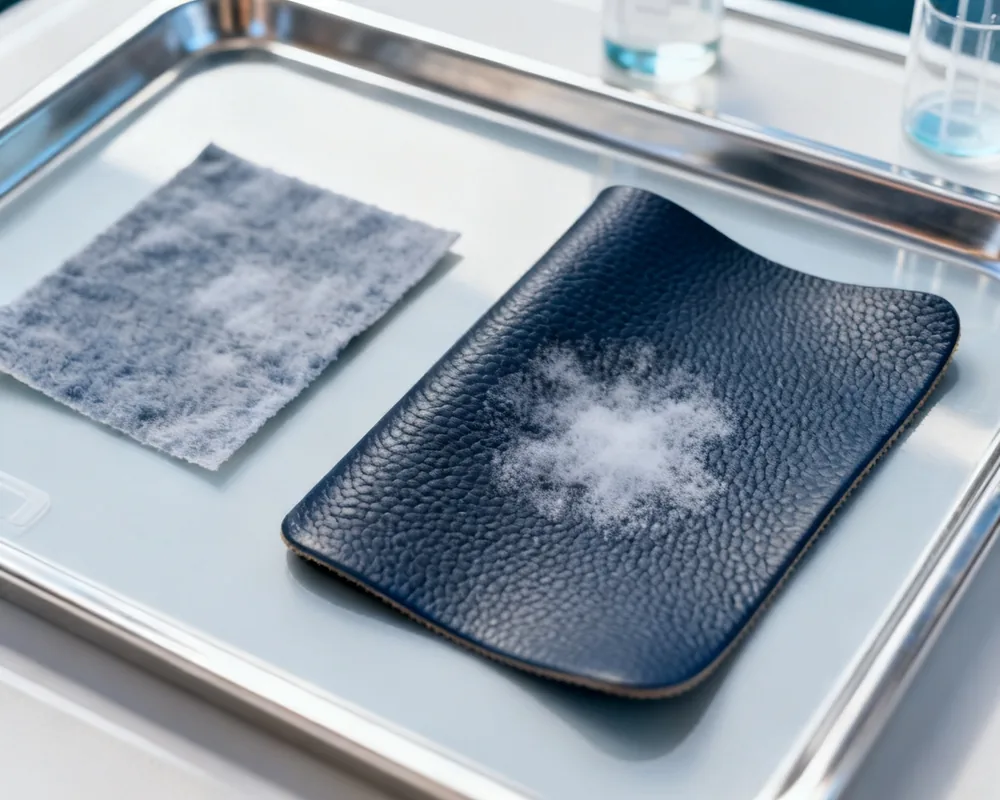
vinyl care specimens on a laboratory tray

Selection trade-offs for coated marine vinyl

Coating and lamination are opposing build notes, not two words for one construction. A coated substrate asks you to check coating add-on, adhesion to the face, and how soft the hand remains after that add-on. A laminated construction asks you to check the film, peel at the join, and the specimen state used for that peel. If the swatch does not show which build it is, leave the cell open. Do not copy a coating sentence onto a laminate, or the reverse, because the marine cushion will be cut and joined on the build that is actually in the roll.

Stock selection and custom development also pull in different directions. A stock conversation has to confirm the actual lot, the shade band, and whether a later roll can continue the same appearance. A custom conversation is controlled by sample, trial, and bulk-approval gates, with the change written down before the next lot. Neither path states a minimum quantity or a date. Those commercial facts are unknown here. The useful split is whether you are matching a lot already identified, or approving a change against a dated reference.

Abrasion resistance and handfeel are a third split. A durability target is readable only with the method, the load or cycle condition, and the end point, such as a stated yarn break or a visible grain loss. A comfort target is a handled sample in the real seat: helm, cockpit, or cabin. Pilling, colorfastness, and gloss change can disagree with an abrasion number. Hydrostatic head, water vapor transmission, air permeability, seam slippage, tear strength, tensile strength, and dimensional stability answer still other questions. GSM in grams per square metre and usable width in centimetres belong beside those notes, including a buyer target such as 450 g/m² when the buyer already uses one. That target is not a published Spradling rating. Batch traceability keeps the lot with the method. No result on this page claims permanent waterproofing or a flame rating.
Match the use before the material label

An application page is a way to frame the environment, the stress and the assembly question. It is not a list of completed installations. Describe contact, exposure, care and processing separately, then ask which evidence belongs to that condition.

Use conditions to separate in the brief
ConditionQuestionEvidence context
Daily contactWhat touch, care and surface change matter?Physical sample and the stated care context
MoistureIs the question liquid resistance or vapour movement?Method and specimen conditioning
AssemblyHow will the textile be cut or joined?Construction and usable width
ColourWhich physical reference is under review?Shade approval notes, not a screen swatch

Describe the use environment

Exposure, cleaning, and the joining method make a marine vinyl brief specific.

Discuss your fabric requirements